How to Choose the Perfect TV in Europe 2026: Complete Guide to OLED, QLED, Mini LED, Size and Features
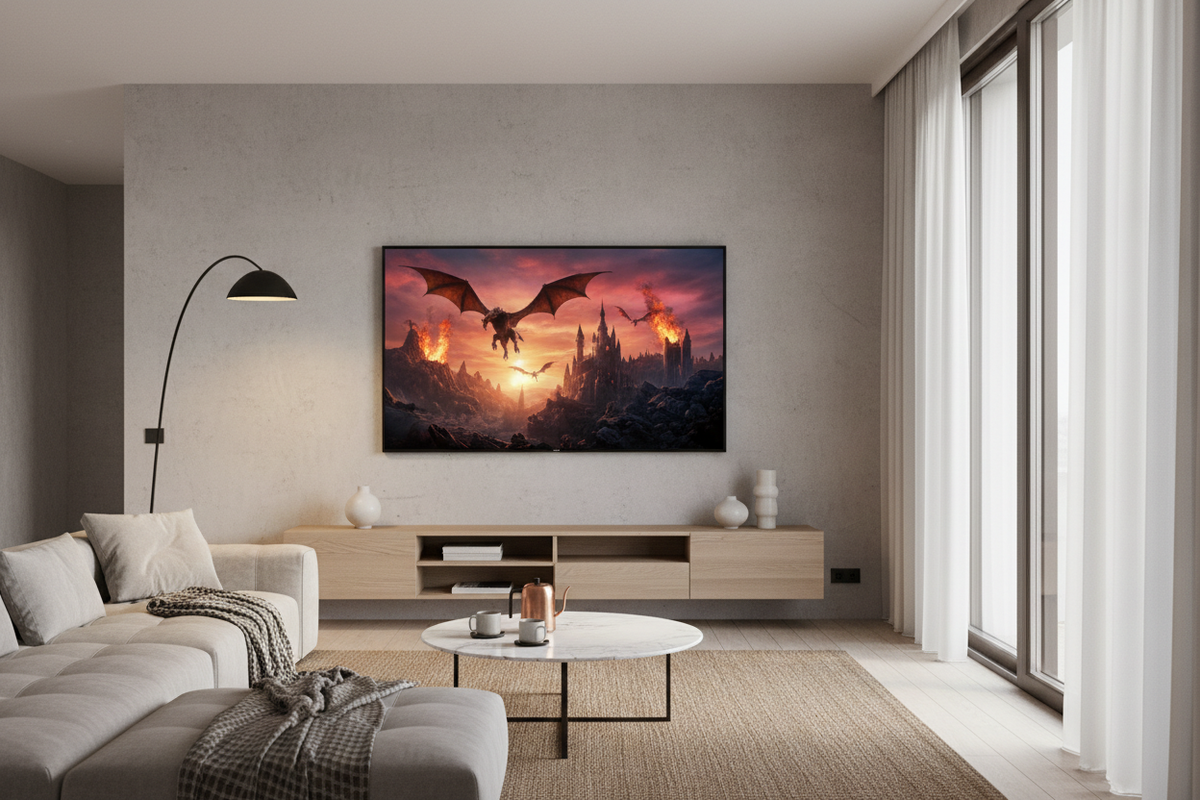
Quick Answer: Choosing the perfect TV in Europe in 2026 comes down to four decisions: technology (OLED for best picture, QLED for brightness, Mini LED for value), size (match to room distance), resolution (4K for most; 8K only for 75"+), and smart platform (Google TV, Tizen, or webOS). Budget €500–€800 for a great 55" experience; €1,500+ for premium OLED.
Why Buying a TV in Europe in 2026 Is More Complex Than Ever
The TV market in 2026 has never offered better picture quality — or more confusing terminology. OLED, QLED, Mini LED, MLA, QD-OLED, WOLED, Neo QLED, ULED: every manufacturer has its own branding for what are, at their core, variations on a handful of underlying technologies. Add in HDR formats (Dolby Vision, HDR10+, HDR10, HLG), refresh rates, smart platforms, and audio systems, and it's easy to feel overwhelmed.
For European buyers, there are additional considerations: EU energy labelling requirements now apply to all TVs (and have become significantly stricter since 2021), the mandatory 2-year statutory warranty under EU Directive 2019/771 protects every purchase from an authorised EU retailer, and EU ecodesign regulations limit standby power consumption and require repairability commitments from manufacturers.
This guide cuts through the marketing noise with clear, practical advice for every budget and room type. For a deep technical comparison of the three main display technologies, see our OLED vs QLED vs Mini LED 2026 guide.
TV Technology Explained: OLED vs QLED vs Mini LED
Understanding the three main TV technologies is the most important step in choosing the right TV. Each has genuine strengths and weaknesses that make them better suited to different viewing environments and use cases.
| Technology | How It Works | Best For | Weakness | EU Price Range (55") |
|---|---|---|---|---|
| OLED | Each pixel emits its own light and can turn off completely | Dark rooms, cinephiles, gaming | Lower peak brightness, burn-in risk (reduced in 2026) | €1,200–€2,500 |
| QD-OLED | OLED + Quantum Dot layer for enhanced colour and brightness | Best of both worlds, gaming, HDR | Premium price, limited sizes | €1,500–€3,000 |
| QLED | LED backlight + Quantum Dot filter for enhanced colour | Bright rooms, sports, HDR highlights | Local dimming blooming, no true blacks | €600–€1,800 |
| Mini LED | Thousands of tiny LEDs for precise local dimming zones | Bright rooms, HDR, value flagship | Some blooming around bright objects | €700–€2,000 |
| Standard LED/LCD | Traditional LED backlight with LCD panel | Budget buyers, secondary rooms | Poor contrast, limited local dimming | €300–€800 |
OLED: The Cinephile's Choice
OLED (Organic Light-Emitting Diode) remains the gold standard for picture quality in 2026. Because each pixel generates its own light and can switch off completely, OLED delivers perfect blacks and infinite contrast ratios that no backlit technology can match. In a dark or moderately lit room, an OLED TV produces an image that simply looks more like real life than any alternative.
In 2026, OLED technology has advanced significantly. MLA (Micro Lens Array) technology, now standard on LG's G-series and C-series OLEDs, has dramatically increased peak brightness — addressing the traditional OLED weakness. Burn-in risk, while still theoretically present, has been reduced to negligible levels for normal viewing patterns through improved panel management algorithms.
For the best OLED TVs available in Europe right now, see our Best OLED TVs 2026 guide.
QLED and Mini LED: The Bright Room Champions
QLED is Samsung's branding for LED TVs enhanced with a Quantum Dot filter, which improves colour volume and brightness. In a bright living room with lots of natural light, a high-end QLED or Mini LED TV can outperform OLED in perceived picture quality — simply because it gets brighter.
Mini LED takes this further by replacing the traditional few dozen backlight zones with thousands of tiny LEDs, enabling much more precise local dimming. Samsung's Neo QLED, LG's QNED, and TCL's QM series all use Mini LED technology to deliver OLED-competitive contrast at lower prices and higher brightness levels.
For the best QLED options in Europe, see our Best QLED TVs 2026 guide.
What Size TV Should You Buy? The European Room Size Guide
TV size is one of the most common buying mistakes — people consistently buy TVs that are too small for their room. The general rule is that your viewing distance should be 1.5–2.5x the screen diagonal for 4K content. At 4K resolution, you can sit closer than with older HD TVs without seeing individual pixels.
| Room Type | Viewing Distance | Recommended Size | Resolution |
|---|---|---|---|
| Small bedroom / studio | 1.5–2.0m | 32–43" | Full HD or 4K |
| Medium bedroom | 2.0–2.5m | 43–50" | 4K |
| Average living room | 2.5–3.0m | 55–65" | 4K |
| Large living room | 3.0–4.0m | 65–75" | 4K |
| Open plan / home cinema | 4.0m+ | 77–98" | 4K or 8K |
The 65" sweet spot: In 2026, 65" has become the most popular TV size in Europe, replacing 55" as the mainstream choice. Prices for 65" 4K TVs have fallen significantly — you can now get an excellent 65" QLED for under €800 and a premium 65" OLED for €1,500–€2,000. For our top picks in this size, see our Best 65 Inch Smart TVs 2026 guide.
Resolution: 4K vs 8K — What Do You Actually Need?
Resolution is one of the most misunderstood TV specifications. Here's the honest truth in 2026:
- 4K (3840x2160): The standard for all new TVs above 43". Native 4K content is widely available via Netflix, Disney+, Apple TV+, Amazon Prime Video, and 4K Blu-ray. This is what you should buy.
- 8K (7680x4320): Native 8K content is virtually non-existent in Europe in 2026. 8K TVs upscale 4K content, which looks good but doesn't justify the significant price premium for most buyers. Only consider 8K for screens 75"+ where the resolution difference becomes more perceptible at normal viewing distances.
- Full HD (1920x1080): Still acceptable for screens under 43" in secondary rooms. Avoid for primary living room TVs in 2026.
HDR: Dolby Vision vs HDR10+ vs HDR10 — Which Matters?
HDR (High Dynamic Range) dramatically expands the range of brightness and colour a TV can display, making highlights brighter and shadows deeper. In 2026, there are three main HDR formats:
| HDR Format | Supported By | Dynamic Metadata | Content Availability |
|---|---|---|---|
| Dolby Vision | LG, Sony, Philips, TCL, Hisense | ✅ Scene-by-scene | Netflix, Disney+, Apple TV+, Vudu |
| HDR10+ | Samsung, Panasonic, Hisense | ✅ Scene-by-scene | Amazon Prime Video, some Blu-rays |
| HDR10 | All HDR TVs | ❌ Static metadata | Universal baseline |
| HLG | All HDR TVs | ❌ Static | Broadcast TV (BBC, ARD, etc.) |
Practical advice: Dolby Vision has the widest content library in Europe in 2026. If you subscribe to Netflix, Disney+, or Apple TV+, prioritise Dolby Vision support. Samsung TVs don't support Dolby Vision (they use HDR10+), which is a meaningful consideration if you use these services heavily.
Smart TV Platforms: Google TV vs Tizen vs webOS vs Android TV
The smart platform determines how you navigate content, which apps are available, and how future-proof your TV is. In 2026, the three dominant platforms in Europe are:
| Platform | Used By | Strengths | Weaknesses |
|---|---|---|---|
| Google TV | Sony, TCL, Hisense, Philips | Best app selection, Google Assistant, Chromecast built-in | Data privacy concerns, ads on home screen |
| Tizen (Samsung) | Samsung | Fast, polished, excellent app support, SmartThings integration | Samsung ecosystem lock-in |
| webOS (LG) | LG | Intuitive interface, ThinQ AI, excellent remote | Fewer apps than Google TV |
| VIDAA (Hisense) | Hisense | Fast, clean interface, good value | Fewer apps, less ecosystem integration |
Platform verdict: Google TV offers the widest app selection and best integration with Android phones and Google services. Tizen and webOS are more polished and faster in daily use. For European buyers concerned about data privacy, LG's webOS has the strongest privacy controls of the major platforms.
Gaming Features: What to Look for in a TV for Gaming
If you use your TV for gaming — PlayStation 5, Xbox Series X, or PC — these specifications matter specifically for gaming performance:
- HDMI 2.1: Required for 4K 120fps gaming. Ensure the TV has at least 2 HDMI 2.1 ports (not just one).
- Input lag: Look for under 10ms in Game Mode. The best gaming TVs achieve 1–2ms.
- VRR (Variable Refresh Rate): Eliminates screen tearing. Look for HDMI Forum VRR, G-Sync Compatible, or FreeSync Premium.
- 4K 120Hz: The current standard for next-gen console gaming. Ensure the panel supports native 120Hz, not just upscaled.
- Auto Low Latency Mode (ALLM): Automatically switches to Game Mode when a console is detected.
EU Energy Labels: What They Mean for TV Buyers
EU energy labels for TVs were significantly revised in 2021 and have become stricter since. The new scale runs from A (most efficient) to G (least efficient) — most TVs now rate between D and F, which sounds alarming but reflects the stricter new scale rather than poor efficiency.
Key points for European TV buyers:
- A 65" TV rated E or F under the new scale is still more efficient than older TVs rated A+ under the old scale
- OLED TVs typically rate D–E; QLED and Mini LED rate E–F due to higher peak brightness
- Annual energy cost difference between an E-rated and G-rated 65" TV is approximately €15–30 per year at average EU electricity prices
- All TVs must display the EU energy label in-store and online — check it before buying
- EU ecodesign regulations also require manufacturers to provide spare parts for 7 years and software updates for 8 years
Complete TV Buying Guide by Budget
| Budget | Best Pick | Technology | Size | Best For |
|---|---|---|---|---|
| Under €500 | Hisense U7N / TCL C745 | Mini LED QLED | 55" | Budget buyers, secondary rooms |
| €500–€800 | Samsung QN85B / LG QNED85 | Neo QLED / Mini LED | 55–65" | Bright living rooms, sports |
| €800–€1,200 | LG C4 OLED 55" / Sony A80L | OLED | 55" | Cinephiles, dark rooms, gaming |
| €1,200–€2,000 | LG C4 OLED 65" / Samsung S90D | OLED / QD-OLED | 65" | Premium living room, gaming |
| €2,000+ | LG G4 OLED / Sony A95L QD-OLED | OLED evo / QD-OLED | 65–77" | Home cinema, enthusiasts |
Don't Forget the Sound: Why a Soundbar Completes Your TV Setup
Modern TVs are thinner than ever — which means their built-in speakers are smaller and less capable than ever. Even a €2,000 OLED TV will have mediocre built-in audio. A quality soundbar transforms the viewing experience, adding the spatial audio and bass that thin TV speakers simply cannot produce.
In 2026, Dolby Atmos soundbars have become affordable and genuinely impressive. A €200–€400 soundbar from Sony, Samsung, or LG will dramatically improve your TV's audio. For our top picks, see our Best Soundbars with Dolby Atmos 2026 guide.
EU Consumer Rights for TV Buyers
- 2-Year Statutory Warranty: All TVs sold by authorised EU retailers carry a mandatory 2-year warranty under EU Directive 2019/771. If your TV develops a fault within 2 years, the retailer must repair, replace, or refund it.
- Right of Withdrawal: Online TV purchases in the EU come with a 14-day right to return without giving any reason — essential for large purchases where you need to verify the TV works correctly in your home environment.
- Ecodesign Regulations: EU regulations require TV manufacturers to provide spare parts for 7 years and software/security updates for 8 years from the date the model is discontinued. This significantly improves long-term ownership value.
- Energy Label: All TVs must display the EU energy label. The label also includes a QR code linking to the European Product Registry for Energy Labelling (EPREL) with full technical specifications.
Frequently Asked Questions: Choosing a TV in Europe 2026
Is OLED worth the premium over QLED in 2026?
For dark or moderately lit rooms, yes — OLED's perfect blacks and infinite contrast deliver a picture quality that QLED cannot match. For bright rooms with lots of natural light, a high-end QLED or Mini LED TV can actually look better than OLED due to higher peak brightness. The LG C4 OLED at ~€1,200 (55") is the sweet spot — it's now bright enough to perform well in most European living rooms while retaining OLED's contrast advantages.
What is the best TV size for a typical European living room?
For a typical European living room with a viewing distance of 2.5–3.0 metres, a 65" TV is the ideal choice in 2026. It's large enough to be immersive at that distance, 4K resolution ensures sharp detail, and prices have fallen to the point where excellent 65" TVs are available from €700 (QLED) to €1,500 (OLED). If your viewing distance is under 2.5m, a 55" is more appropriate.
Do I need an 8K TV in 2026?
No. Native 8K content is virtually non-existent in Europe in 2026, and there's no credible timeline for widespread 8K streaming or broadcasting. 8K TVs upscale 4K content, which looks good but doesn't justify the significant price premium (typically €1,000–€3,000 more than equivalent 4K models). Invest that money in a better 4K TV with OLED technology instead.
Which smart TV platform is best for European buyers?
For most European buyers, Google TV (Sony, TCL, Hisense) offers the best combination of app availability, voice control, and smartphone integration. LG's webOS is the best choice for privacy-conscious buyers and those who prioritise interface polish. Samsung's Tizen is excellent if you're in the Samsung ecosystem. All three platforms support the major European streaming services (Netflix, Disney+, Amazon Prime Video, Apple TV+, YouTube).
What HDMI version do I need for gaming on PS5 or Xbox Series X?
You need HDMI 2.1 to take full advantage of PS5 and Xbox Series X capabilities — specifically 4K at 120fps, VRR (Variable Refresh Rate), and ALLM (Auto Low Latency Mode). Ensure the TV has at least 2 HDMI 2.1 ports, as some manufacturers include only one. All TVs recommended in this guide include at least 2 HDMI 2.1 ports.
How long should a TV last, and what warranty do I get in Europe?
A quality TV purchased from an authorised EU retailer should last 7–10 years with normal use. Under EU Directive 2019/771, all TVs carry a mandatory 2-year statutory warranty. EU ecodesign regulations additionally require manufacturers to provide spare parts for 7 years and software updates for 8 years from when the model is discontinued — significantly better long-term support than in most other markets.
Conclusion: Find Your Perfect TV in Europe in 2026
Choosing the right TV in 2026 is about matching the technology to your room, your viewing habits, and your budget. OLED for dark rooms and cinephiles; QLED and Mini LED for bright rooms and sports fans; 65" for most European living rooms; 4K for everyone; and a soundbar to complete the experience.
Every TV recommended in this guide is available from authorised EU retailers with full 2-year statutory warranty coverage, CE certification, and EU energy labelling. Don't compromise on the fundamentals — the right TV for your room will deliver years of enjoyment.
Browse our complete range of TVs at OnlineStore24.eu — OLED, QLED, Mini LED, and standard LED TVs in every size, all with EU warranty coverage and fast shipping across Europe.