Best Kids' Smartwatches 2026: Safe & Fun Wearables for Children in Europe
Best Kids' Smartwatches 2026: Safe & Fun Wearables for Children in Europe
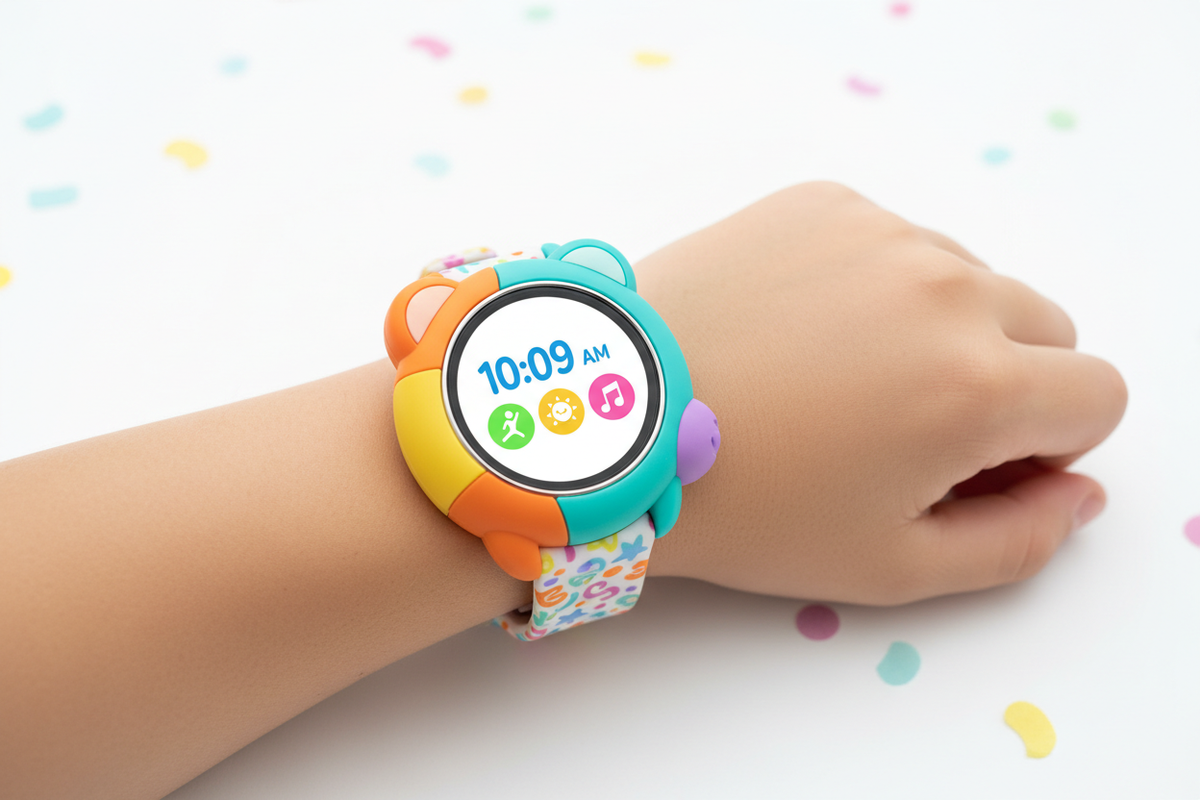
If you're searching for the best kids' smartwatches in 2026, you're looking for something that does far more than tell the time. Today's children's smartwatches combine GPS tracking, two-way calling, activity monitoring, and fun interactive features into a wearable that keeps kids connected and parents reassured. For European families, the good news is that the EU's strict product safety framework means any kids' smartwatch sold through a legitimate EU retailer has passed rigorous safety and data protection checks. This guide covers everything parents need to know to choose the right device for their child.
Why EU Safety Standards Matter for Kids' Wearables
Children's electronic products sold in Europe are subject to some of the most stringent safety regulations in the world. When shopping for a kids' smartwatch, look for the following:
CE marking
Mandatory for all electronic products sold in the EU. CE marking confirms the device complies with EU directives covering electrical safety, electromagnetic compatibility (EMC), and radio equipment (RED — Radio Equipment Directive). For a device worn on a child's wrist all day, this certification is non-negotiable.
GDPR compliance
Kids' smartwatches collect sensitive data — location, voice recordings, health metrics, and contact information. Under the EU's General Data Protection Regulation (GDPR), devices marketed to children must implement specific data protection measures, including parental consent for data collection and strict limits on data sharing with third parties. Always check that the manufacturer's app and platform are GDPR-compliant before purchasing.
Material safety
The strap and casing of a kids' smartwatch are in direct contact with skin for extended periods. Look for hypoallergenic, BPA-free materials. EU REACH regulations restrict the use of hazardous chemicals in consumer products, providing an additional layer of protection for EU-sold devices.
SAR (Specific Absorption Rate)
All mobile-connected devices sold in the EU must comply with SAR limits — the maximum rate at which the body absorbs radiofrequency energy. EU limits are among the strictest globally. CE-marked devices comply with these limits by definition.
Key Features to Look for in a Kids' Smartwatch
Not all kids' smartwatches are equal. Here's what separates a genuinely useful device from a novelty toy:
GPS tracking
The most important feature for most parents. Real-time GPS tracking lets you see your child's location on a map via a smartphone app. Look for watches with geofencing — the ability to set a safe zone (home, school, grandparents' house) and receive an alert if your child leaves it. GPS accuracy varies between models; dedicated GPS chips outperform those relying solely on Wi-Fi or cellular triangulation.
Two-way calling and messaging
Most kids' smartwatches support calls and messages between the watch and approved contacts only — a parent-controlled whitelist. This keeps children connected without exposing them to unknown callers. Look for watches with a built-in speaker and microphone of sufficient quality for clear calls, and check whether the device requires a SIM card (and associated monthly cost) or operates via Wi-Fi only.
SIM card vs. Wi-Fi only
SIM-enabled watches work anywhere with mobile coverage — essential for GPS tracking and calling when your child is away from home Wi-Fi. Wi-Fi-only models are cheaper to run but only connect when in range of a known network. For most families, a SIM-enabled watch with a low-cost data SIM (€5–10/month on a European MVNO) offers the best balance of functionality and cost.
Parental controls
A quality kids' smartwatch gives parents full control via a companion app: approved contacts, screen time limits, do-not-disturb schedules (e.g. during school hours), location history, and SOS emergency alerts. The app experience is as important as the watch hardware — check reviews of the companion app before purchasing.
SOS button
A dedicated SOS button that sends an emergency alert with the child's location to pre-set parent contacts is a standard and essential feature. Some models also trigger an automatic call to the first contact on the list.
Battery life
A kids' smartwatch needs to last a full school day without charging. Look for a minimum of 24 hours of battery life under normal use (GPS active, occasional calls). Some models offer 48–72 hours with GPS in power-saving mode.
Durability
Children are hard on their belongings. Look for watches with an IP67 or IP68 water resistance rating (splash-proof to fully submersible), reinforced casings, and durable silicone straps. A cracked screen or broken strap within weeks of purchase is a common complaint with budget models.
Fun features
A watch a child actually wants to wear is more useful than one they leave at home. Look for features that engage children: step counters with reward systems, games, customisable watch faces, voice messages, and photo sharing with approved contacts. The best kids' smartwatches balance parental utility with genuine child appeal.
Age-by-Age Guide: Matching the Watch to Your Child
Ages 4–6 (early primary)
At this age, simplicity is key. Look for large, easy-to-read displays, durable construction, and basic features: GPS, SOS button, and calling to parents. Avoid complex interfaces — the watch should be intuitive enough for a young child to use independently in an emergency.
Ages 7–10 (primary school)
The sweet spot for kids' smartwatches. Children this age benefit from GPS tracking during school commutes and after-school activities, step counters that encourage physical activity, and messaging with friends (within a parent-controlled contact list). Look for watches with school mode — automatic do-not-disturb during school hours.
Ages 11–13 (pre-teen)
Older children often resist obviously child-oriented devices. Look for watches with a more mature design that doesn't stand out from adult smartwatches, while retaining parental oversight features. At this age, a transition to a more capable fitness-focused smartwatch may also be appropriate — see our guide to the best smartwatches for fitness in 2026 for options that grow with your child.
Data Privacy: What European Parents Need to Know
Kids' smartwatches collect significant amounts of sensitive data — precise location history, voice recordings, health metrics, and social contacts. Before purchasing, investigate the manufacturer's data practices:
- Where is data stored? EU GDPR requires that data on EU residents be stored and processed in compliance with EU law. Prefer manufacturers with EU-based or GDPR-compliant data infrastructure.
- Who has access to your child's data? Read the privacy policy carefully. Some budget manufacturers monetise user data — unacceptable for a children's device.
- Can you delete data? GDPR gives you the right to request deletion of all data held about your child. Verify the manufacturer provides a clear process for this.
- Is the companion app regularly updated? Security vulnerabilities in smartwatch apps have been identified in the past. Choose manufacturers with a track record of regular security updates.
If you're interested in how wearable technology is evolving beyond children's devices, our guides to the best smart rings in 2026 and the Apple Watch Series 10 cover the cutting edge of adult wearable technology.
Buying Tips: How to Choose the Right Kids' Smartwatch
Before purchasing, work through this checklist:
- Confirm CE marking — non-negotiable for any electronic device worn by a child
- Check GDPR compliance — read the privacy policy; verify data is handled in accordance with EU law
- Decide: SIM or Wi-Fi only — SIM-enabled is strongly recommended for GPS tracking away from home
- Check the companion app reviews — the app is as important as the hardware; poor app = poor experience
- Verify battery life — minimum 24 hours under normal use with GPS active
- Check water resistance — IP67 minimum; IP68 for active or younger children
- Involve your child in the choice — a watch they like wearing is a watch that actually keeps them safe
- Check the warranty — EU consumer law guarantees 2 years minimum; register the device for extended manufacturer coverage
- Factor in ongoing costs — SIM data plans, subscription fees for premium app features, and replacement straps
Conclusion: Keep Your Children Safe and Connected in 2026
The best kids' smartwatches in 2026 give parents genuine peace of mind and children a fun, engaging wearable they'll actually want to use. With GPS tracking, two-way calling, parental controls, and EU-certified safety standards, today's children's smartwatches are sophisticated tools for modern family life — not just novelty gadgets.
Browse our full range of kids' smartwatches at OnlineStore24.eu — with fast delivery across Europe, CE-certified products, and detailed specifications to help you choose the right device for your child's age, needs, and personality. Safe, connected, and smiling.